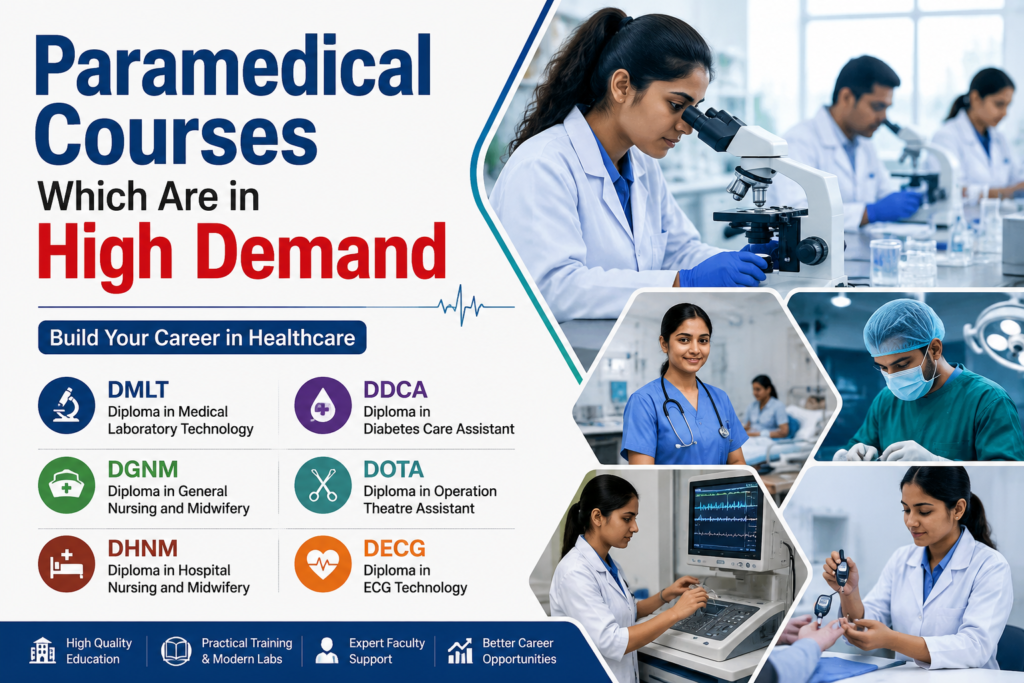
Paramedical Courses Which Are in High Demand
The healthcare industry is growing fast. This means there is a demand for skilled paramedical professionals in hospitals, diagnostic centres, laboratories and clinics. As medical services keep expanding students are looking for courses that teach skills and lead to stable jobs.
Many students want to enter the healthcare sector. For them job-oriented paramedical courses are an option. These programs focus on hands-on learning. They prepare students for world medical environments.
Why Choose Job-Oriented Paramedical Courses?
Paramedical courses are different from programs. They are designed to develop skills that employers value. Students get classroom instruction and laboratory practice. They also get exposure. This helps them become job-ready after completing their course.
The healthcare industry needs professionals who can assist doctors. They need people who can support care manage laboratories and handle medical equipment. These skills are developed through career-focused education.
High-Demand Paramedical Courses
- Diploma in Operation Theatre Management: Students learn how to assist surgeons. They learn to prepare operation theatres sterilize instruments and support procedures. Qualified professionals work in hospitals and surgical centres.
- Diploma in Pharmacy Assistant: This course prepares students to assist pharmacists. They learn to dispense medicines manage inventory and maintain pharmacy records in hospitals and retail pharmacies.
- Diploma in General Healthcare Assistant: Students develop skills in care. They learn nursing assistance, infection control and hospital support services. This makes them members of healthcare teams.
- Diploma in Clinical Pathology & Lab Assistant: This program focuses on laboratory testing. Students learn specimen collection, pathology procedures and diagnostic support. This creates opportunities in hospitals and diagnostic laboratories.
Advanced Diploma Programs with On-the-Job Training
Some students want practical experience. They can choose diploma programs with On-the-Job Training (OJT). This allows them to gain real workplace experience before graduation.
Learn with Rajamma Institute of Allied Health Sciences
Choosing the institution is important. Rajamma Institute of Allied Health Sciences provides career-oriented education. Their programs meet the needs of todays healthcare industry.
Students benefit from faculty. They get laboratory sessions and skill-based training. The programs are industry-relevant. This helps students become healthcare professionals.
Career Opportunities After Completion
Graduates can explore careers in:
- Multispecialty Hospitals
- Diagnostic Laboratories
- Operation Theatres
- Pharmacies
- Clinics
- Rehabilitation Centres
- Healthcare Organizations
The healthcare industry is growing. Qualified paramedical professionals have career prospects, across India.
Conclusion
Job-oriented paramedical courses provide students with skills. They offer employment opportunities and long-term career growth. By choosing Rajamma Institute of Allied Health Sciences students receive quality education. They get hands-on training and industry exposure. This helps them succeed in the healthcare sector.
Frequently Asked Questions
1. What are job-oriented paramedical courses?
Job-oriented paramedical courses provide practical healthcare training that prepares students for careers in hospitals, laboratories, pharmacies, and clinics.
2. Which paramedical courses are in high demand?
Popular courses include Operation Theatre Management, Pharmacy Assistant, General Healthcare Assistant, and Clinical Pathology & Lab Assistant.
3. Why choose Rajamma Institute of Allied Health Sciences?
The institute offers industry-focused training, experienced faculty, practical learning, and career-oriented diploma programs.
4. What career opportunities are available after completing these courses?
Graduates can work in hospitals, diagnostic laboratories, operation theatres, pharmacies, clinics, and healthcare organizations.
5. Do students receive practical training?
Yes. Students gain hands-on experience through laboratory sessions, skill-based learning, and On-the-Job Training (OJT) in selected advanced diploma programs.