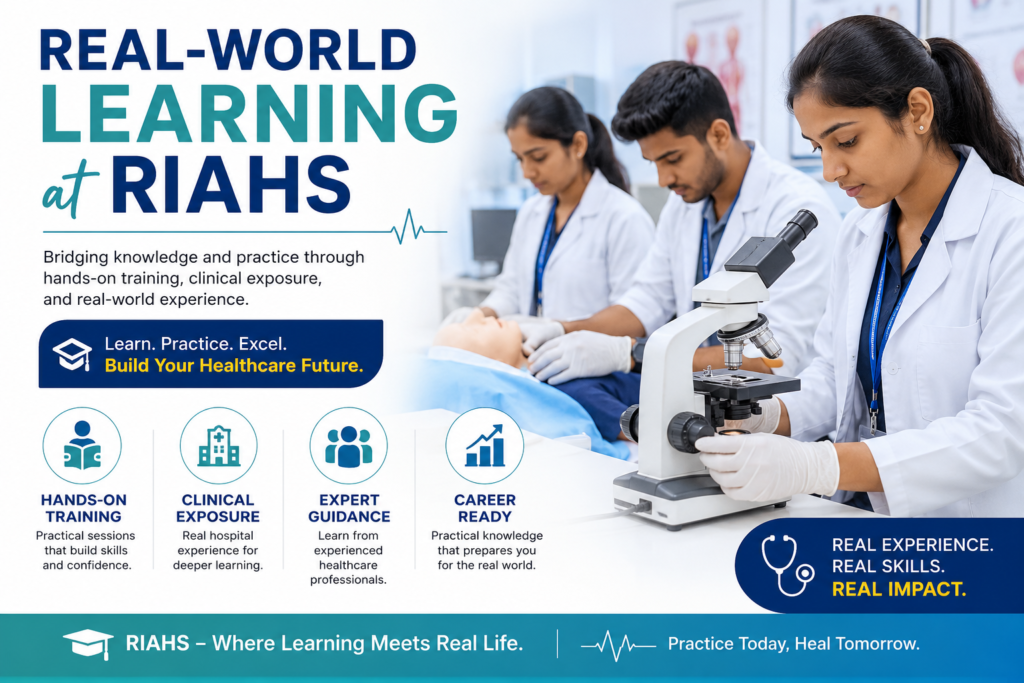
Real-World Learning at RIAHS
Healthcare education is most effective when students can apply what they learn in real-life situations. While classroom lessons provide the foundation, practical experience helps students understand how healthcare systems function and prepares them to confidently handle professional responsibilities. In today’s healthcare industry, employers seek graduates who are not only academically qualified but also capable of working efficiently in real clinical environments.
This is why real-world learning has become an essential part of allied health education. Students who receive practical exposure during their studies develop stronger technical skills, better communication, and greater confidence before beginning their careers.
Rajamma Institute of Allied Health Sciences (RIAHS), a unit of Rajamma Medical Foundation (RMF), believes that education should prepare students for real healthcare challenges. Through practical training, laboratory sessions, clinical exposure, and industry-oriented learning, RIAHS helps students build the knowledge and experience needed for successful healthcare careers.
Why Real-World Learning Matters
Healthcare is a profession that demands both knowledge and practical ability. Understanding medical concepts is important, but students must also know how to perform procedures, communicate with patients, and work as part of a healthcare team.
Real-world learning helps students:
- Apply classroom knowledge effectively
- Develop practical healthcare skills
- Improve confidence in clinical settings
- Understand workplace responsibilities
- Learn professional ethics
- Adapt to real healthcare environments
This practical approach prepares students for the expectations of hospitals, laboratories, pharmacies, and other healthcare facilities.
Hands-On Practical Training
At Rajamma Institute of Allied Health Sciences (RIAHS), practical learning is integrated into every stage of education. Students actively participate in various training activities that strengthen both technical and professional skills.
Practical learning includes:
- Laboratory practical sessions
- Clinical demonstrations
- Medical equipment handling
- Healthcare simulations
- Patient care practice
- Skill-based workshops
These experiences allow students to practise healthcare procedures under the guidance of experienced faculty while gaining confidence in their abilities.
Learn Through On-the-Job Training (OJT)
One of the major advantages offered by RIAHS is On-the-Job Training (OJT) for Advanced Diploma students. OJT provides valuable exposure to real healthcare environments where students observe experienced professionals and participate in day-to-day clinical activities.
During OJT, students learn to:
- Understand hospital workflows
- Apply classroom learning in real situations
- Improve communication with healthcare teams
- Build professional confidence
- Develop workplace discipline
- Gain valuable industry experience
This exposure helps students make a smooth transition from education to employment.
Develop Career-Ready Skills
Real-world learning helps students build more than technical knowledge. It also develops the professional qualities healthcare employers value the most.
Students improve:
- Communication skills
- Teamwork
- Time management
- Critical thinking
- Professional ethics
- Leadership
- Problem-solving abilities
- Patient interaction
These essential skills prepare graduates to work confidently in a variety of healthcare settings.
Learn from Experienced Faculty
Practical learning becomes even more valuable when guided by experienced educators. At RIAHS, faculty members combine academic teaching with professional expertise, helping students understand both theory and practice.
Students receive continuous guidance, constructive feedback, and encouragement to improve their technical skills while developing confidence and professionalism.
Career Opportunities After Practical Learning
Healthcare organizations prefer professionals who already understand workplace expectations. Graduates who receive practical training often adapt more quickly to professional roles and contribute effectively from the beginning of their careers.
Students completing allied health programs at RIAHS can pursue opportunities in:
- Hospitals
- Diagnostic Laboratories
- Clinical Laboratories
- Pharmacies
- Operation Theatres
- Rehabilitation Centres
- Healthcare Clinics
- Community Healthcare Services
RIAHS also provides career guidance and placement assistance to help students begin successful healthcare careers.
Why Choose RIAHS?
Students choose Rajamma Institute of Allied Health Sciences (RIAHS) because it provides education that reflects real healthcare practices.
The institute offers:
- Career-oriented diploma and advanced diploma programs
- Practical laboratory training
- Clinical demonstrations
- On-the-Job Training (OJT)
- Experienced faculty
- Modern laboratories
- Career counselling
- Placement support
This comprehensive learning approach helps students become skilled, confident, and industry-ready healthcare professionals.
Conclusion
Real-world learning plays a vital role in preparing students for successful healthcare careers. By combining classroom education with practical training and clinical exposure, students gain the confidence and experience needed to excel in professional healthcare environments.
Rajamma Institute of Allied Health Sciences (RIAHS), a unit of Rajamma Medical Foundation (RMF), is committed to providing students with practical education that prepares them for real healthcare challenges. From the laboratory to the workplace, every learning experience at RIAHS helps students build a strong foundation for a rewarding future in allied health.
Frequently Asked Questions (FAQs)
1. What is real-world learning in healthcare education?
Real-world learning combines classroom education with practical training, clinical demonstrations, and workplace exposure to prepare students for healthcare careers.
2. Does RIAHS provide practical learning opportunities?
Yes. RIAHS offers laboratory practical sessions, clinical demonstrations, and On-the-Job Training (OJT) for Advanced Diploma students.
3. How does practical learning improve career opportunities?
Practical learning helps students develop technical skills, workplace confidence, communication, teamwork, and professional behaviour, making them more employable.
4. What are the benefits of On-the-Job Training (OJT)?
OJT allows students to gain supervised experience in real healthcare settings, helping them understand clinical workflows and workplace responsibilities.
5. Why choose Rajamma Institute of Allied Health Sciences (RIAHS)?
RIAHS, a unit of Rajamma Medical Foundation (RMF), provides quality education, practical training, experienced faculty, career guidance, and placement support to prepare students for successful healthcare careers.