Importance of Soft Skills in Healthcare
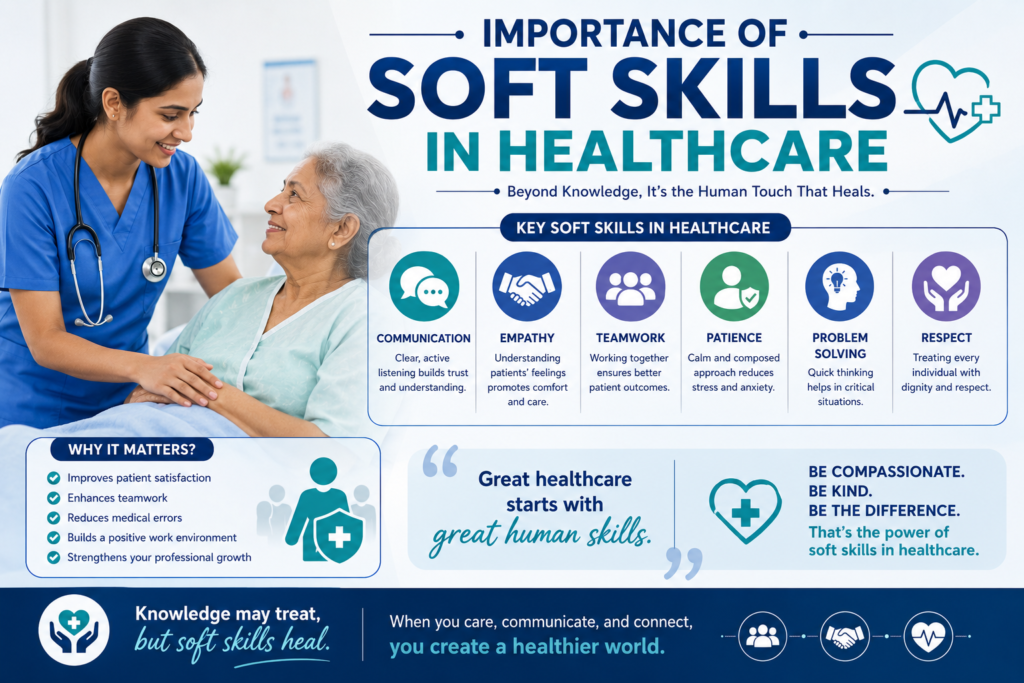
Healthcare is about more than medical knowledge and technical expertise. Every day, healthcare professionals interact with patients, families, doctors, nurses, and colleagues, making communication and interpersonal abilities just as important as clinical skills. These qualities, commonly known as soft skills, help professionals provide compassionate care, work effectively in teams, and build trust with patients.
As the healthcare industry continues to grow, employers are looking for professionals who combine technical competence with strong soft skills. This combination improves patient experiences and creates a positive working environment.
Rajamma Institute of Allied Health Sciences (RIAHS), a unit of Rajamma Medical Foundation (RMF), understands the value of developing well-rounded healthcare professionals. Along with academic learning and practical training, RIAHS encourages students to build the soft skills needed for long-term success in healthcare careers.
What Are Soft Skills?
Soft skills are personal qualities and interpersonal abilities that influence how individuals communicate, collaborate, and solve problems. Unlike technical skills, soft skills help professionals interact effectively with others and manage workplace responsibilities.
Some of the most important soft skills in healthcare include:
- Communication
- Empathy
- Teamwork
- Time management
- Problem-solving
- Adaptability
- Professionalism
- Leadership
These skills help healthcare professionals perform their duties with confidence and compassion.
Why Communication Matters
Clear communication is one of the most important skills in healthcare. Professionals must explain information accurately, listen carefully to patients, and coordinate with healthcare teams to ensure quality care.
Good communication helps:
- Build patient trust
- Reduce misunderstandings
- Improve teamwork
- Support better healthcare outcomes
- Create a positive patient experience
Strong communication also helps professionals work efficiently in busy healthcare environments.
Empathy Builds Better Patient Care
Patients often experience stress, fear, or uncertainty during medical treatment. Healthcare professionals who show empathy and understanding can make patients feel more comfortable and supported.
Empathy helps professionals:
- Build meaningful patient relationships
- Improve patient satisfaction
- Encourage cooperation during treatment
- Create a caring healthcare environment
Compassionate care is one of the hallmarks of an excellent healthcare professional.
Teamwork Is Essential in Healthcare
Hospitals and healthcare facilities rely on collaboration between doctors, nurses, laboratory technicians, pharmacists, and other allied health professionals.
Students who develop teamwork skills learn how to:
- Share responsibilities effectively
- Support colleagues
- Communicate openly
- Solve problems together
- Deliver coordinated patient care
At RIAHS, students participate in practical activities that encourage collaboration and professional communication.
Practical Learning Helps Develop Soft Skills
Soft skills are best learned through experience. During practical laboratory sessions, clinical demonstrations, and healthcare simulations, students develop confidence while interacting with faculty, classmates, and healthcare environments.
Advanced Diploma students also benefit from On-the-Job Training (OJT), where they gain valuable workplace experience that strengthens communication, teamwork, responsibility, and professionalism.
Career Benefits of Strong Soft Skills
Healthcare employers value professionals who demonstrate excellent interpersonal skills alongside technical knowledge.
Strong soft skills can help students:
- Build professional confidence
- Adapt to workplace challenges
- Improve leadership potential
- Strengthen patient relationships
- Increase career opportunities
- Grow professionally over time
These qualities make graduates more prepared for successful and rewarding healthcare careers.
Why Choose RIAHS?
At Rajamma Institute of Allied Health Sciences (RIAHS), education focuses on developing both technical expertise and professional qualities.
Students benefit from:
- Career-oriented healthcare programs
- Practical laboratory training
- Clinical demonstrations
- On-the-Job Training (OJT)
- Experienced faculty
- Professional skill development
- Career guidance
- Placement support
This balanced approach helps students become compassionate, confident, and industry-ready healthcare professionals.
Conclusion
Soft skills are just as important as technical knowledge in healthcare. Effective communication, empathy, teamwork, professionalism, and adaptability help healthcare professionals provide better patient care while building successful careers.
As a unit of Rajamma Medical Foundation (RMF), Rajamma Institute of Allied Health Sciences (RIAHS) prepares students through quality education, practical experience, and professional development. By nurturing both clinical abilities and interpersonal skills, RIAHS helps students become capable healthcare professionals who can make a meaningful difference in people’s lives.
Frequently Asked Questions (FAQs)
1. What are soft skills in healthcare?
Soft skills are personal and interpersonal abilities such as communication, teamwork, empathy, problem-solving, and professionalism that help healthcare professionals work effectively.
2. Why are soft skills important for healthcare professionals?
Soft skills improve patient care, strengthen teamwork, enhance communication, and help professionals build trust with patients and colleagues.
3. How does RIAHS help students develop soft skills?
RIAHS develops soft skills through classroom learning, practical training, clinical demonstrations, group activities, and On-the-Job Training (OJT).
4. Which soft skills are most important in healthcare?
Communication, empathy, teamwork, adaptability, professionalism, leadership, time management, and problem-solving are among the most important soft skills.
5. Why choose Rajamma Institute of Allied Health Sciences (RIAHS)?
RIAHS, a unit of Rajamma Medical Foundation (RMF), offers career-focused education, practical learning, experienced faculty, and career support to prepare students for successful healthcare careers.