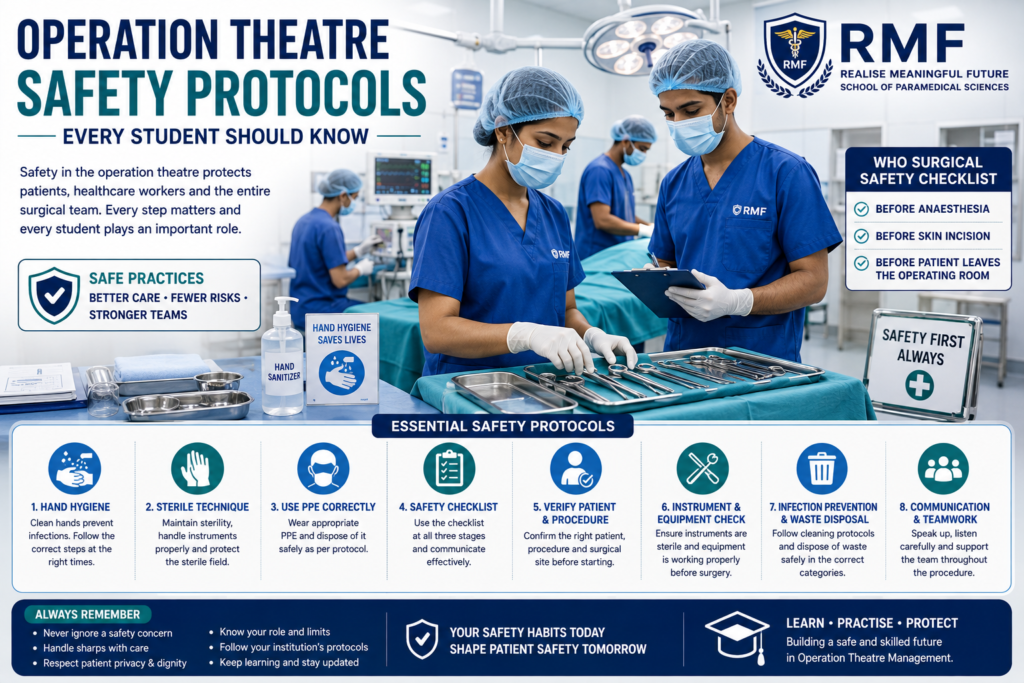
Operation Theatre Safety Protocols Every Student Should Know
Safety is a part of operation theatre work.
Students need to understand how preparation, infection prevention, sterile technique, equipment safety and communication contribute to a surgical environment.
Hand Hygiene
Students should follow hand hygiene and surgical hand-preparation procedures.
Sterile Technique
Students should understand non-sterile areas and learn how to prevent contamination.
They should handle instruments carefully and follow approved sterilisation procedures.
PPE
Students should use protective equipment according to the procedure and hospital protocol.
This may include:
- Gloves
- Masks
- Surgical gowns
- Eye protection
- Head coverings
Surgical Safety Checklist
The WHO Surgical Safety Checklist supports safety checks at three stages:
- Before anaesthesia
- Before skin incision
- Before the patient leaves the operating room
It is designed to improve communication and teamwork.
Instruments and Equipment
Students should learn how to identify, prepare and safely handle instruments.
They should also understand equipment checks. Report problems instead of attempting unauthorised repairs.
Infection Prevention
Infection prevention includes hand hygiene, sterile technique, instrument decontamination, environmental cleaning and safe handling of contaminated materials.
Communication
Students should listen carefully follow instructions and report safety concerns immediately.
Teamwork is a part of surgical safety.
Patient Privacy
Students should respect patient privacy, dignity and confidentiality throughout their learning experience.
Know Your Limits
Students should only perform tasks for which they are trained and authorised.
They should work under supervision and ask for guidance when they are unsure.
Preparing at RMF
At RMF students pursuing the Diploma in Operation Theatre Management can develop knowledge related to operation theatre procedures, surgical instruments, equipment, sterilisation, safety and teamwork.
Operation theatre safety depends on habits and teamwork.
Students who learn hand hygiene, sterile technique, equipment safety, communication and patient-safety practices can build a strong foundation for their future healthcare careers.
Safety should always come first. Students should follow the current protocols and supervision requirements of their healthcare institution.
Frequently Asked Questions
1. Why is operation theatre safety important?
It helps protect patients and healthcare workers and supports surgical practice.
2. What does the surgical safety checklist do?
It helps the surgical team complete safety checks and improve communication during surgery.
3. What should a student do when they notice a safety concern?
They should report it immediately to the appropriate supervising healthcare professional.
4. Why is sterile technique important?
It helps reduce contamination and supports infection prevention during procedures.
5. Should students perform procedures independently?
Students should work within their training and authorisation and, under appropriate supervision.