How Healthcare Assistants Improve Patient Recovery
Patient recovery often involves more than medical treatment.
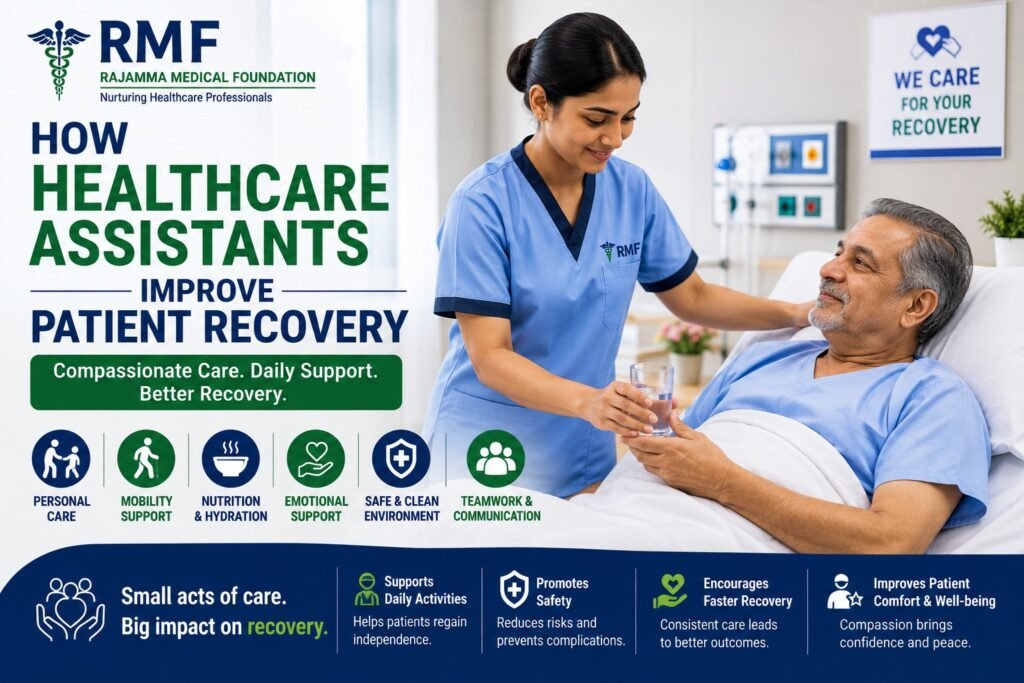
Patients may need assistance with personal care, movement, nutrition and everyday activities. Healthcare assistants can provide this support while working as part of a healthcare team.
Helping With Daily Care
Healthcare assistants may help patients with personal hygiene, dressing, grooming and other routine activities.
Providing this support can help patients maintain comfort and dignity.
Supporting Mobility
Patients recovering from illness, injury or surgery may need assistance with movement.
Healthcare assistants may provide appropriate mobility support according to their training and the instructions of the healthcare team.
Supporting Food and Fluid Intake
Healthcare assistants may assist patients with eating and drinking when this falls within their assigned duties.
They can also communicate concerns about a patient’s intake to the appropriate healthcare professional.
Observing and Reporting
Healthcare assistants spend time with patients and may notice changes in their comfort, behaviour or ability to perform routine activities.
Reporting relevant observations helps the healthcare team respond appropriately.
Maintaining Hygiene and Safety
Healthcare assistants can contribute to infection prevention and a safe patient environment by following workplace procedures for:
Hand hygiene
PPE
Cleaning
Waste handling
Linen management
Patient-area safety
Providing Patient Support
Patients may feel anxious or frustrated during recovery.
Healthcare assistants can provide respectful communication and appropriate reassurance while maintaining professional boundaries.
Working as Part of a Team
Recovery involves different healthcare professionals.
Healthcare assistants may work alongside nurses, doctors, physiotherapists, dietitians and other healthcare professionals.
Good communication helps ensure that patient needs are communicated effectively.
Healthcare Assistant Training at RMF
Rajamma Medical Foundation (RMF) provides healthcare education and training.
Students interested in healthcare assistant careers can explore relevant programmes and training opportunities offered by RMF.
For the latest course details, eligibility and admission information, students should refer to current RMF information.
Conclusion
Healthcare assistants can make an important contribution to patient recovery by supporting everyday needs and helping maintain a safe and comfortable care environment.
Their work complements the roles of nurses, doctors and other healthcare professionals and forms an important part of patient-centred care.
Frequently Asked Questions
- How do healthcare assistants support recovery?
They may assist with personal care, mobility, nutrition, comfort, hygiene and routine patient needs.
- Can healthcare assistants diagnose medical conditions?
No. Diagnosis and clinical decisions are responsibilities of appropriately qualified healthcare professionals.
- Why is teamwork important?
Healthcare assistants work alongside other professionals, so effective communication helps coordinate patient care.
- What skills are useful for healthcare assistants?
Communication, compassion, observation, teamwork, attention to detail and infection-control awareness are valuable skills.
- Why should students consider healthcare assistant training?
Training can help students develop the knowledge, practical skills and professional behaviours needed to support patients in healthcare environments.