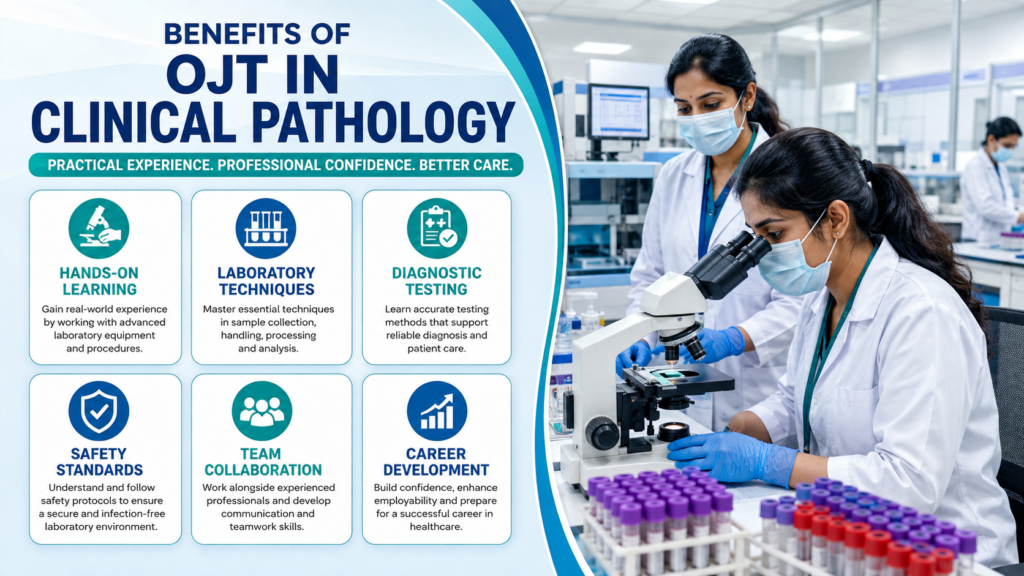
Benefits of OJT in Clinical Pathology
Imagine learning to ride a bicycle by only reading a book. No matter how detailed the instructions are, real confidence comes only when you actually get on the bicycle. Clinical Pathology works in much the same way. Understanding laboratory science is important, but applying that knowledge inside a real diagnostic laboratory is where students truly grow.
That’s why On-the-Job Training (OJT) is one of the most valuable parts of Clinical Pathology education. It allows students to experience professional laboratory work, observe experienced technologists, and understand how every test contributes to patient care.
At Rajamma Institute of Allied Health Sciences (RIAHS), a unit of Rajamma Medical Foundation (RMF), practical learning is integrated into the programme so students can confidently move from the classroom to real healthcare environments.
Experience Makes Learning More Meaningful
Every laboratory follows specific procedures to ensure accurate testing and patient safety. Reading about these procedures is helpful, but witnessing them in action creates a completely different understanding.
During OJT, students become familiar with:
- Laboratory workflow
- Sample collection procedures
- Specimen handling
- Laboratory documentation
- Safety practices
- Quality standards
Instead of memorising information, students begin to understand why every step matters.
Build Confidence One Day at a Time
Walking into a laboratory for the first time can feel intimidating. There’s specialised equipment, strict safety rules, and experienced professionals working with precision.
OJT gives students time to adjust gradually.
As they gain experience, they become more comfortable with:
- Daily laboratory routines
- Professional communication
- Working responsibly
- Following laboratory protocols
- Supporting healthcare teams
By the end of the training, many students feel far more prepared than they expected.
Learn Professional Laboratory Habits
Good laboratory professionals aren’t recognised only by what they know. They’re recognised by how they work.
During practical training, students learn habits that remain useful throughout their careers.
These include:
- Paying attention to detail
- Maintaining cleanliness
- Following safety protocols
- Respecting patient confidentiality
- Organising laboratory work efficiently
- Working responsibly with equipment
Developing these habits early creates a strong professional foundation.
Learn From Experienced Healthcare Professionals
One of the biggest advantages of OJT is the opportunity to observe experienced laboratory technologists during their daily work.
Students gain valuable insights into:
- Professional decision-making
- Laboratory ethics
- Team communication
- Time management
- Accuracy in testing
- Workplace discipline
These real-life experiences cannot always be explained fully in a classroom.
Practical Learning at RIAHS
At Rajamma Institute of Allied Health Sciences (RIAHS), students are encouraged to combine theoretical learning with practical application. The Clinical Pathology programme focuses on helping students understand how laboratory science supports diagnosis and patient care.
Students benefit from:
- Experienced faculty guidance
- Practical laboratory sessions
- On-the-Job Training (OJT)
- Modern laboratory facilities
- Student-focused learning
- Industry-oriented healthcare education
This balanced approach helps students develop both technical knowledge and workplace confidence.
Turn Knowledge Into Experience
A Clinical Pathology course becomes even more valuable when students have opportunities to apply what they’ve learned. OJT provides that opportunity by helping students experience real laboratory environments while developing practical skills that support their future careers.
If you’re interested in studying Clinical Pathology with practical laboratory exposure, fill out the contact form on the RIAHS website to learn more about admissions and available programmes.
Frequently Asked Questions
1. What is On-the-Job Training (OJT) in Clinical Pathology?
OJT is practical laboratory training where students learn by observing and participating in real diagnostic laboratory activities under professional supervision.
2. Why is OJT important for Clinical Pathology students?
It helps students gain practical experience, improve confidence, and understand professional laboratory procedures before beginning their healthcare careers.
3. What practical skills are learned during OJT?
Students learn specimen handling, laboratory safety, communication, teamwork, documentation, and professional laboratory practices.
4. Does RIAHS provide practical laboratory exposure?
Yes. RIAHS combines classroom education with practical laboratory sessions and On-the-Job Training to prepare students for professional healthcare environments.
5. Who can apply for the Clinical Pathology programme at RIAHS?
Students who have completed 10th, 12th (pass or fail), or any degree can contact RIAHS to know more about admissions and eligibility.