Benefits of Practical Training in Paramedical
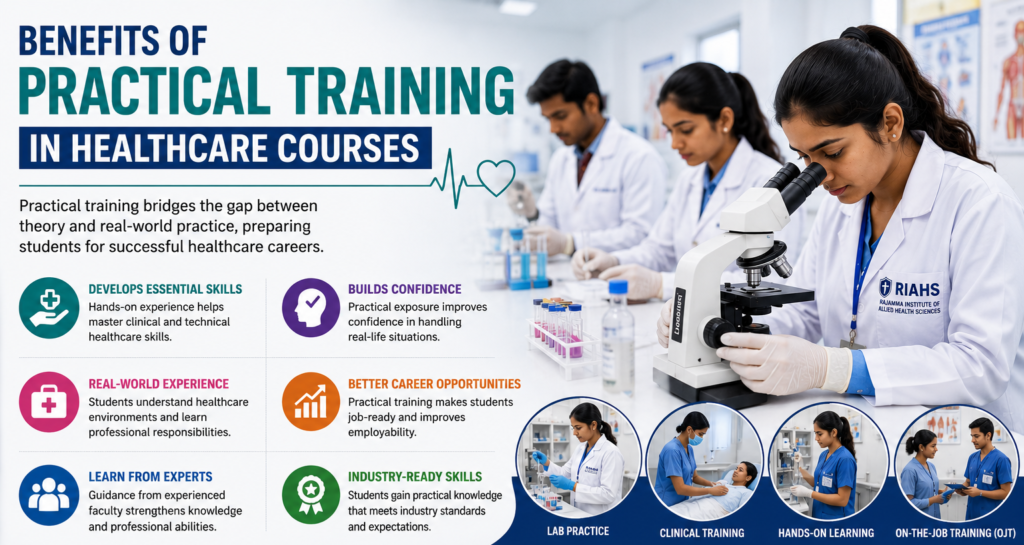
Paramedical is one of the few professions where knowledge alone is not enough. While classroom learning provides a strong theoretical foundation, practical training helps students apply that knowledge in real-life situations. From handling medical equipment to assisting in patient care, hands-on experience plays a vital role in preparing students for successful healthcare careers.
As the healthcare industry continues to grow in 2026, employers are looking for professionals who are confident, skilled, and ready to work from day one. This is why practical training has become an essential part of every quality healthcare course.
Rajamma Institute of Allied Health Sciences (RIAHS), a unit of Rajamma Medical Foundation (RMF), focuses on practical learning by combining classroom education with laboratory sessions, clinical demonstrations, and On-the-Job Training (OJT) to prepare students for real healthcare environments.
Why Practical Training Is Important
Healthcare professionals deal with patients, laboratory procedures, medicines, and medical equipment every day. Practical training allows students to understand how these responsibilities are carried out in real clinical settings.
Instead of only learning concepts from textbooks, students gain firsthand experience that helps them develop confidence and technical expertise.
Develop Essential Clinical Skills
Hands-on training enables students to learn important healthcare skills such as:
- Laboratory procedures
- Specimen collection and handling
- Patient care techniques
- Operation theatre assistance
- Pharmacy practices
- Infection control and safety measures
- Medical equipment handling
These practical skills are essential for working efficiently in hospitals and healthcare facilities.
Gain Real-World Experience
One of the biggest advantages of practical training is exposure to real healthcare environments. Students learn how hospitals, diagnostic laboratories, and clinics operate while understanding professional responsibilities and teamwork.
At RIAHS, Advanced Diploma students also benefit from On-the-Job Training (OJT), allowing them to experience workplace practices before starting their careers.
Build Confidence and Professionalism
Practical training helps students overcome hesitation and become more confident in performing healthcare tasks. Regular practice improves accuracy, communication skills, time management, and problem-solving abilities.
These qualities are highly valued by employers and contribute to long-term career success.
Improve Career Opportunities
Healthcare organizations prefer candidates who have practical experience because they require less on-the-job training after recruitment.
Students who complete practical training are often better prepared for interviews and can adapt quickly to professional healthcare environments.
Learn from Experienced Faculty
Practical sessions conducted by experienced faculty members allow students to receive personalized guidance and immediate feedback.
At Rajamma Institute of Allied Health Sciences (RIAHS), students learn through:
- Modern laboratory facilities
- Clinical demonstrations
- Hands-on practical sessions
- Industry-focused teaching methods
- Experienced faculty guidance
This approach helps students strengthen both their technical knowledge and practical abilities.
Why Choose RIAHS?
Rajamma Institute of Allied Health Sciences (RIAHS), a unit of Rajamma Medical Foundation (RMF), is committed to preparing students for successful healthcare careers through quality education and practical learning.
The institute offers:
- Career-oriented diploma and advanced diploma programs
- Practical laboratory training
- Clinical demonstrations
- On-the-Job Training (OJT)
- Experienced faculty
- Modern learning facilities
- Placement guidance
By focusing on skill development and real-world experience, RIAHS helps students become confident and job-ready healthcare professionals.
Final Thoughts
Practical training is one of the most valuable aspects of healthcare education. It bridges the gap between theory and real-world practice, helping students develop the confidence and technical skills needed to succeed in the healthcare industry.
If you are looking for a healthcare institute that emphasizes hands-on learning and career readiness, Rajamma Institute of Allied Health Sciences (RIAHS), a unit of Rajamma Medical Foundation (RMF), provides the practical education and professional guidance needed to build a successful future in healthcare.
FAQs
1. Why is practical training important in healthcare courses?
Practical training helps students apply theoretical knowledge, develop technical skills, and gain confidence in real healthcare environments.
2. What practical training does RIAHS provide?
RIAHS offers laboratory sessions, clinical demonstrations, hands-on practical classes, and On-the-Job Training (OJT) for Advanced Diploma programs.
3. Does practical training improve job opportunities?
Yes. Employers prefer candidates with practical experience because they can adapt more quickly to professional healthcare settings.
4. Which healthcare courses at RIAHS include practical training?
All diploma and advanced diploma programs at RIAHS include practical learning, with Advanced Diploma courses offering additional On-the-Job Training (OJT).
5. Why choose Rajamma Institute of Allied Health Sciences (RIAHS)?
RIAHS, a unit of Rajamma Medical Foundation (RMF), provides industry-focused education, experienced faculty, practical laboratory training, modern facilities, and placement guidance to prepare students for successful