
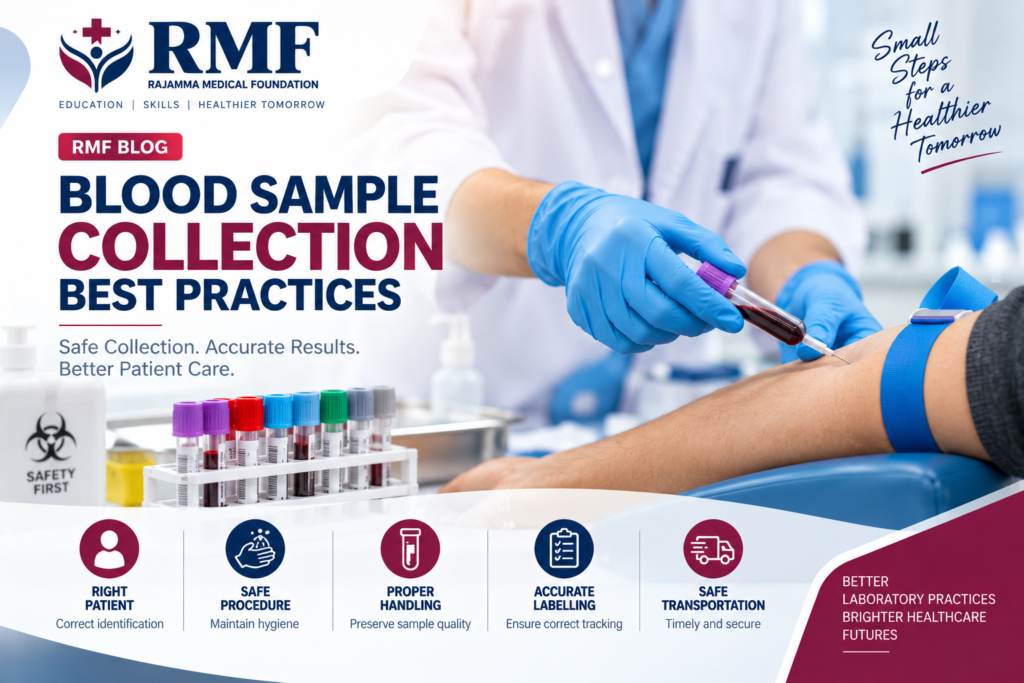
Blood Sample Collection: Best Practices
Blood sample collection is an important part of modern healthcare and laboratory diagnosis. Blood specimens are used for a wide range of investigations, including routine blood counts, biochemical testing, hormone analysis, infection testing, and other diagnostic procedures.
The quality of a laboratory result depends not only on the testing process but also on how the specimen is collected, identified, handled, and transported. Incorrect patient identification, contamination, poor specimen handling, or inappropriate storage can affect specimen quality and may lead to inaccurate or delayed results.
Why Proper Blood Sample Collection Matters
A blood specimen must be collected and handled carefully so that it accurately represents the patient’s condition.
Proper collection helps to:
- Maintain specimen quality
- Reduce contamination and collection-related errors
- Protect patients and healthcare workers
- Prevent specimen identification mistakes
- Support accurate laboratory testing
- Reduce the need for repeat sample collection
- Ensure safe transportation and processing
1. Confirm the Test Request
Before collecting a blood sample, the healthcare worker should verify the laboratory request and understand what specimen is required.
Important points include:
- Confirm the requested investigation.
- Check whether the patient requires any specific preparation.
- Review the required specimen type and collection container.
- Confirm any special instructions provided by the laboratory.
- Ensure that the collection procedure follows the facility’s standard operating procedure (SOP).
2. Correctly Identify the Patient
Patient identification is one of the most important steps in specimen collection.
Healthcare workers should use the identification process established by their healthcare facility and verify the patient against the laboratory request before collecting the specimen.
An incorrectly identified sample can result in the laboratory result being associated with the wrong patient. Correct patient identification and specimen tracking are therefore essential parts of quality specimen collection.
3. Maintain Proper Hand Hygiene
Hand hygiene is essential before and after blood sample collection.
Appropriate infection-control practices include:
- Perform hand hygiene before the procedure.
- Use appropriate gloves according to the procedure and facility policy.
- Avoid touching clean equipment unnecessarily.
- Perform hand hygiene after removing gloves.
- Keep the collection area clean and organized.
4. Prepare the Required Equipment
All necessary materials should be prepared before starting the procedure.
Depending on the investigation and collection method, supplies may include:
- Appropriate blood collection tubes
- Needles or approved blood collection devices
- Tourniquet
- Gloves
- Skin antiseptic
- Sterile gauze
- Adhesive dressing
- Laboratory request form
- Proper specimen labels
- Approved sharps container
Preparing the equipment beforehand helps maintain an organized workflow and reduces unnecessary interruptions during collection.
5. Use Appropriate Skin Antisepsis
The collection site should be prepared according to the procedure and institutional protocol.
The skin should be appropriately disinfected and allowed to dry as required before blood collection. The antiseptic and preparation method may vary depending on the type of specimen and the patient’s circumstances.
Proper skin antisepsis helps reduce contamination and supports infection prevention.
6. Use Safe, Single-Use Collection Devices
Blood collection devices should be appropriate for the procedure and used according to established safety protocols.
Sterile, single-use blood-sampling devices should be used. After use, contaminated sharps should be discarded immediately into an appropriate sharps container rather than being left on the work surface.
Healthcare workers should never reuse needles, lancets, or other single-use blood collection devices.
7. Collect the Correct Specimen
Different laboratory tests require different specimen types, containers, additives, volumes, and handling conditions.
The person collecting the specimen should therefore follow:
- The laboratory’s collection requirements
- The facility’s SOP
- The manufacturer’s instructions where applicable
- The requirements of the specific laboratory test
Using an incorrect tube or collecting an unsuitable specimen can result in specimen rejection or unreliable testing.
8. Label the Specimen Correctly
Correct labeling is a critical part of blood sample collection.
The specimen should be labeled according to the healthcare facility’s established procedure and should contain the required patient and collection information.
Depending on the laboratory system, information may include:
- Patient name or unique identifier
- Date and time of collection
- Requested test or relevant specimen information
- Collector identification, where required
Accurate identification and labeling help ensure that specimens can be properly tracked throughout laboratory processing.
9. Handle and Transport the Sample Properly
Blood samples should be handled carefully after collection.
The specimen should be:
- Kept in the appropriate container
- Protected from contamination
- Packaged safely
- Transported according to laboratory requirements
- Stored under the required conditions when immediate transport is not possible
Appropriate handling, transportation timeframes, temperature requirements, and storage conditions help maintain specimen quality.
10. Dispose of Used Materials Safely
Used needles and other sharps must be disposed of immediately in appropriate sharps containers.
Other contaminated materials should be discarded according to the healthcare facility’s biomedical waste management procedures.
Safe disposal protects healthcare workers, patients, laboratory personnel, housekeeping staff, and others who may come into contact with clinical waste.
Common Errors to Avoid During Blood Sample Collection
Some common problems can compromise specimen quality or patient safety.
These include:
- Incorrect patient identification
- Incorrect or incomplete specimen labeling
- Using the wrong collection tube
- Insufficient specimen volume
- Contamination of the specimen
- Poor handling or storage
- Delayed transportation
- Failure to follow laboratory SOPs
- Unsafe disposal of sharps
- Inadequate communication with the patient
A strong specimen-collection process should address these risks before, during, and after collection.
Role of Laboratory Assistants in Blood Sample Collection
Laboratory assistants and other trained healthcare personnel can play an important role in maintaining the quality and safety of the specimen collection process.
Their responsibilities may include:
- Preparing collection materials
- Supporting patient identification procedures
- Following infection-control practices
- Collecting specimens within their authorized scope of practice
- Labeling and handling specimens correctly
- Maintaining documentation
- Preparing specimens for transportation
- Following laboratory SOPs
- Reporting collection problems or unsuitable specimens to the appropriate professional
Proper education and training are essential for personnel involved in phlebotomy because blood collection involves both patient-safety and occupational risks.
Importance of Training in Blood Sample Collection
Blood sample collection requires practical knowledge, attention to detail, communication skills, and an understanding of laboratory procedures.
Training can help healthcare and laboratory personnel understand:
- Basic anatomy relevant to specimen collection
- Infection prevention
- Patient communication
- Specimen identification
- Collection equipment
- Specimen handling
- Laboratory documentation
- Sharps safety
- Sample transportation
- Quality-control principles
Following standardized procedures helps create a safer and more reliable laboratory workflow.
Frequently Asked Questions
1. Why is proper blood sample collection important?
Proper blood sample collection helps maintain specimen quality, protect patients and healthcare workers, reduce errors, and support accurate laboratory testing.
2. Why is patient identification important before blood collection?
Correct identification helps ensure that the collected specimen is matched to the correct patient and laboratory request, reducing the risk of serious identification errors.
3. Why should blood samples be labeled correctly?
Correct labeling allows the laboratory to accurately identify and track the specimen throughout processing and reporting.
4. How should used needles be disposed of?
Used needles and other sharps should be discarded immediately into an appropriate sharps container according to the healthcare facility’s safety procedures.
5. Can training improve blood sample collection practices? Yes. Appropriate education and practical training help personnel understand safe collection techniques, infection prevention, specimen handling, patient identification, and laboratory quality requirements.