Clinical Exposure: The Key to Paramedical Success
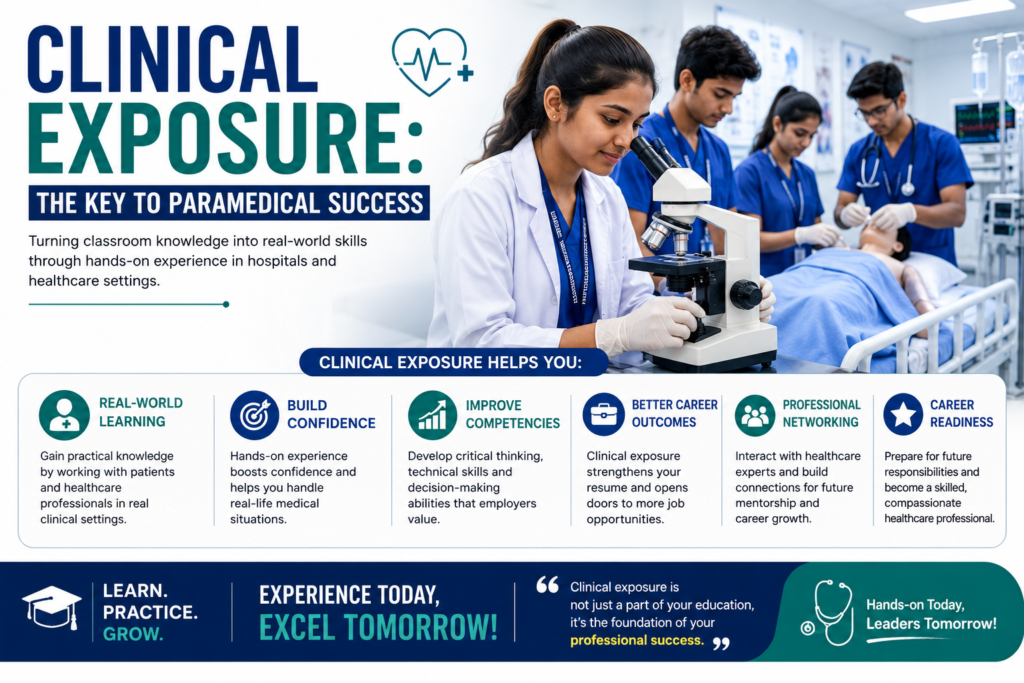
Clinical exposure is one of the most valuable aspects of paramedical education. While classroom learning provides the theoretical foundation, real success in healthcare comes from applying that knowledge in actual clinical settings. From interacting with patients to observing medical procedures, clinical exposure helps students develop the confidence, skills, and professionalism required to excel in the healthcare industry.
As healthcare organizations increasingly seek job-ready professionals, students with practical clinical experience have a significant advantage. They understand workplace expectations, communicate effectively with healthcare teams, and are better prepared to deliver quality patient care.
Rajamma Institute of Allied Health Sciences (RIAHS), a unit of Rajamma Medical Foundation (RMF), believes that practical learning is essential for career success. Through clinical demonstrations, laboratory training, and On-the-Job Training (OJT) in Advanced Diploma programs, RIAHS helps students gain the real-world experience needed for a successful healthcare career.
What is Clinical Exposure?
Clinical exposure refers to the practical experience students gain by observing and participating in healthcare activities within hospitals, laboratories, clinics, or other medical settings.
It allows students to apply classroom knowledge while learning from experienced healthcare professionals. Clinical exposure helps students understand patient care, medical procedures, teamwork, and workplace responsibilities before entering the profession.
Why Clinical Exposure is Important
Connects Theory with Practice
Healthcare education involves more than reading textbooks. Clinical exposure helps students apply theoretical concepts in real situations, making learning more meaningful and effective.
Builds Professional Confidence
Working in a healthcare environment helps students become comfortable with patient interactions, medical equipment, and clinical procedures. This confidence makes the transition from student to healthcare professional much smoother.
Improves Patient Care Skills
Students learn how to communicate with patients, provide compassionate care, maintain professionalism, and support doctors and nurses during various healthcare activities.
Develops Workplace Readiness
Clinical exposure teaches students how hospitals and healthcare facilities operate. They learn teamwork, time management, professional ethics, and communication skills that employers highly value.
Increases Career Opportunities
Healthcare employers often prefer candidates who already have practical clinical experience because they can adapt quickly to professional responsibilities.
Benefits of Clinical Exposure
Students who receive clinical exposure develop valuable skills, including:
- Practical patient care experience
- Better communication skills
- Increased confidence
- Professional ethics
- Teamwork and collaboration
- Clinical decision-making skills
- Time management
- Adaptability in healthcare environments
These experiences help students become competent and industry-ready professionals.
Clinical Training at RIAHS
At Rajamma Institute of Allied Health Sciences (RIAHS), students receive extensive practical learning throughout their education.
Training includes:
- Practical laboratory sessions
- Clinical demonstrations
- Patient care simulations
- Medical equipment handling
- Professional skill development
Students enrolled in Advanced Diploma programs also benefit from On-the-Job Training (OJT), where they gain hands-on experience in real healthcare environments under professional supervision.
This practical exposure prepares students to confidently begin their healthcare careers.
Courses That Benefit from Clinical Exposure
Clinical exposure is an important part of several programs at RIAHS, including:
- Diploma in General Healthcare Assistant
- Advanced Diploma in General Healthcare Assistant with OJT
- Diploma in Clinical Pathology & Lab Assistant
- Advanced Diploma in Clinical Pathology & Lab Assistant with OJT
- Diploma in Operation Theatre Management
- Diploma in Pharmacy Assistant
Each program combines academic learning with practical experience to help students develop industry-ready skills.
Why Choose RIAHS?
Students choose Rajamma Institute of Allied Health Sciences (RIAHS) because the institute focuses on preparing healthcare professionals through practical learning.
RIAHS offers:
- Career-oriented Diploma and Advanced Diploma programs
- Practical laboratory training
- Clinical demonstrations
- Advanced Diploma programs with OJT
- Experienced faculty
- Modern laboratory facilities
- Career guidance
- Placement assistance
This comprehensive approach helps students graduate with the confidence and practical knowledge required by today’s healthcare industry.
Conclusion
Clinical exposure is the foundation of successful paramedical education. It helps students transform classroom knowledge into practical skills, build confidence, and understand the realities of working in healthcare. Graduates with clinical experience are better prepared to meet employer expectations and provide high-quality patient care.
As a unit of Rajamma Medical Foundation (RMF), Rajamma Institute of Allied Health Sciences (RIAHS) is committed to delivering practical, career-focused education. Through clinical training, laboratory practice, and On-the-Job Training, RIAHS equips students with the skills and experience needed to succeed in the rapidly growing healthcare sector.
Frequently Asked Questions (FAQs)
1. What is clinical exposure in paramedical education?
Clinical exposure is practical training where students gain real healthcare experience by observing and participating in patient care and clinical procedures.
2. Why is clinical exposure important?
It helps students apply theoretical knowledge, improve practical skills, build confidence, and become job-ready for healthcare careers.
3. Does RIAHS provide clinical exposure?
Yes. RIAHS offers practical laboratory training, clinical demonstrations, and On-the-Job Training (OJT) in Advanced Diploma programs to give students real healthcare experience.
4. Which courses at RIAHS include practical clinical training?
Clinical training is included in programs such as General Healthcare Assistant, Clinical Pathology & Lab Assistant, Operation Theatre Management, and Pharmacy Assistant.
5. Why choose Rajamma Institute of Allied Health Sciences (RIAHS)?
RIAHS, a unit of Rajamma Medical Foundation (RMF), provides career-focused education, practical training, experienced faculty, modern facilities, career guidance, and placement assistance to prepare students for successful healthcare careers.