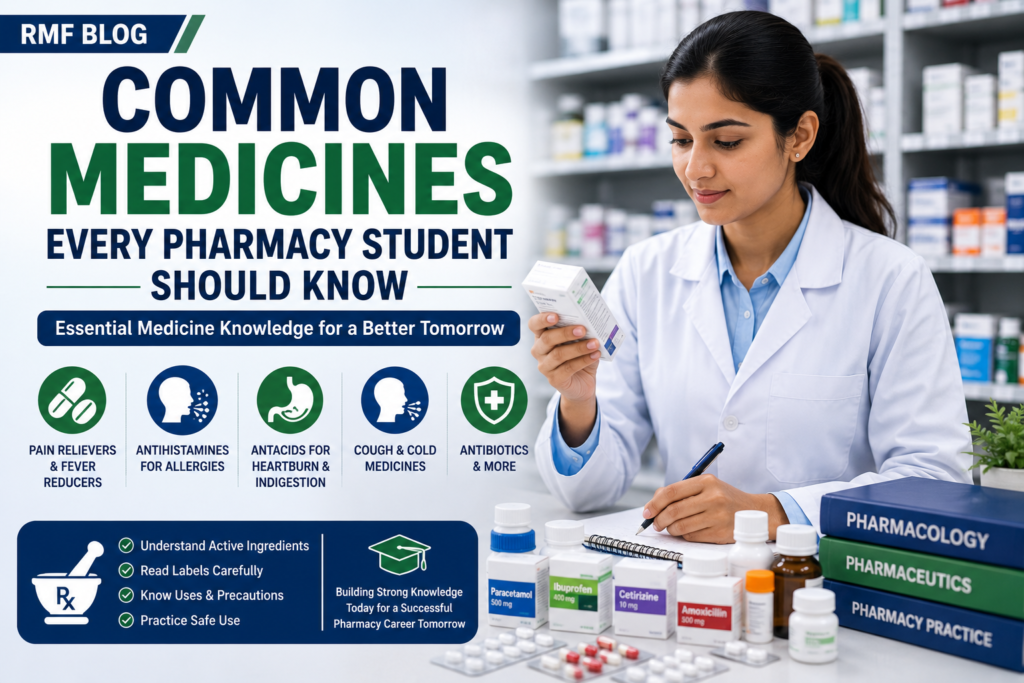
Common Medicines Every Pharmacy Student Should Know
Pharmacy students need to understand types of common medicines during their education.
Knowing common medicine names is useful. Students should also understand their active ingredients, general uses, warnings, interactions and safe handling.
Pain Relievers and Fever Reducers
Common examples include Paracetamol, Ibuprofen, Aspirin and Naproxen.
Students should learn about their uses and the differences, between these medicines.
Antihistamines
Antihistamines are commonly used for allergy-related symptoms.
Examples include Cetirizine, Loratadine, Diphenhydramine and Promethazine.
Pharmacy students should learn about these medicines.
Medicines for allergies are really common.
Antihistamines are used for allergy-related symptoms.
Examples of medicines for allergies include cetirizine, loratadine, diphenhydramine and promethazine.
Antacids are used for heartburn and indigestion.
Common ingredients in antacids include calcium carbonate, magnesium hydroxide, aluminium hydroxide and sodium bicarbonate.
Cough and cold medicines have ingredients.
Students should always check the labels on medicines. Understand what the ingredients do how to use them and what the warnings are.
Antibiotics are important for pharmacy students to learn about.
Examples of antibiotics include amoxicillin, azithromycin, doxycycline and ciprofloxacin.
Students should learn about the types of antibiotics when to use them and how to use them safely.
Medicines for allergies and skin conditions are also important.
These can include antihistamines, creams for infections, antiseptics and corticosteroids.
Vitamins and supplements are common too.
These can include vitamin D, calcium, iron and vitamin B-complex.
Students should learn about what they do how to use them and if they can interact with medicines.
Medicines for problems are used by many people.
Pharmacy students may encounter products such as antacids, medicines that reduce acid, products for rehydration and laxatives.
Understanding what these medicines do can help students learn more about pharmacy.
The ingredients in medicines are really important.
The same ingredient can be in medicines.
Learning about ingredients helps students understand what medicines contain and see similarities between them.
When reading medicine labels students should check the ingredients what the medicine is for, how to use it warnings and other information.
They should also check the expiry date.
Learning to read labels is important for using medicines
Medicines can interact with medicines, food, drinks or health conditions.
Understanding these interactions is important for pharmacy students.
Medicine knowledge should always go with safety awareness.
Things like age, allergies, pregnancy, existing health conditions and other medicines can affect how medicines are used.
RMF. Rajamma Medical Foundation provides education in Allied Health Sciences with training that is focused on the industry.
RMF offers a Diploma in Pharmacy Assistant as part of its healthcare programmes.
Students who are interested in the programme should check the course details, eligibility and admission requirements directly with RMF.
Understanding medicines is important for pharmacy students.
Students should learn about the categories of medicines and develop knowledge of ingredients, uses, warnings, interactions and safe handling.
This knowledge can help students build a foundation for responsible pharmacy practice.
Frequently Asked Questions
1. What medicines should pharmacy students learn about?
Pharmacy students should learn about categories such as pain relievers, antihistamines, antacids, cough and cold medicines and antibiotics.
2. Why are ingredients in medicines
Ingredients help identify what a medicine contains and help students understand similarities between different products.
3. Are over-the-counter medicines safe?
No over-the-counter medicines can have directions, warnings, precautions and potential interactions.
4. Why should pharmacy students learn about interactions?
Understanding interactions is important for responsible pharmacy practice.
5. Does RMF offer a Diploma in Pharmacy Assistant?
Yes RMF offers the Diploma in Pharmacy Assistant.