Future of Paramedical Careers in India
The healthcare industry in India has grown a lot over the ten years. There are now good hospitals, diagnostic centers, specialized clinics and rehabilitation facilities. This means there is a growing need for healthcare services. As healthcare grows the need for paramedical professionals also grows. This makes paramedical education a promising career choice for students who want a stable and rewarding future.
Hospitals today need more than just doctors and nurses. Behind every treatment there is a team of trained healthcare professionals. They do laboratory tests help during surgeries, support care, manage medical equipment and ensure smooth hospital operations. These professionals are the backbone of the healthcare system. Their importance grows every year.
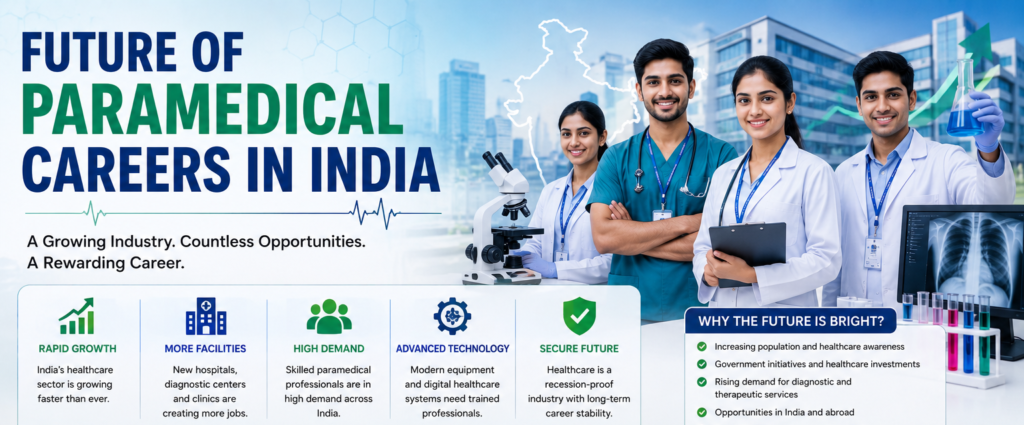
One big reason for the future of paramedical careers is Indias growing healthcare infrastructure. The government has started initiatives. Private healthcare investments, medical tourism and awareness about healthcare have also increased. This has led to hospitals, diagnostic laboratories, speciality clinics and emergency care centres across the country. Every new healthcare facility creates opportunities for paramedical professionals.
Technology is also changing the future of healthcare. Modern hospitals now use laboratory equipment, digital patient records and medical imaging technologies. They also use automated systems and specialised medical devices. Healthcare institutions need professionals who understand these technologies and can use them efficiently. Students who get industry-oriented training are well prepared for these changing healthcare environments.
The growing population and lifestyle-related diseases have created a greater demand for healthcare services. Conditions like diabetes, heart disease and hypertension require diagnosis, monitoring and patient care. This has increased the demand for trained healthcare assistants, laboratory professionals and operation theatre staff.
Another advantage of choosing a career is the variety of employment opportunities available. Graduates can work in hospitals, diagnostic laboratories, operation theatres and pharmacies. They can also work in rehabilitation centers, blood banks, emergency departments and community healthcare centers. Some professionals also pursue education and specialise in their chosen healthcare field.
Practical training plays a role in preparing students for future healthcare careers. Employers prefer candidates who already have experience with hospital procedures and patient interaction. Institutions that provide laboratory training and On-the-Job Training (OJT) help students become professionals.
Selecting the educational institution is very important for students planning a career in healthcare. Quality education, experienced faculty and modern laboratory facilities help students develop knowledge and professional confidence.
Rajamma Institute of Allied Health Sciences (RIAHS) offers career-oriented healthcare education. They have courses like Diploma in Operation Theatre Management and Diploma in Pharmacy Assistant. Students seeking practical experience can also choose the Advanced Diploma in General Healthcare Assistant with On-the-Job Training (OJT). These programs are designed to prepare students for the evolving healthcare industry.
The future of careers in India is bright. As healthcare services continue to expand skilled professionals will remain in demand. Students who choose quality education and practical training can build careers while making a meaningful contribution, to society. For aspiring healthcare professionals Rajamma Institute of Allied Health Sciences provides the knowledge, skills and practical experience needed to succeed in this growing industry.
FAQ
1. Is the future of paramedical careers bright in India?
Yes. India’s growing healthcare sector is creating strong demand for skilled paramedical professionals in hospitals, laboratories, clinics, and diagnostic centres.
2. What career opportunities are available after paramedical courses?
Graduates can work in operation theatres, pharmacies, laboratories, rehabilitation centres, hospitals, blood banks, and various healthcare organizations.
3. Why is the demand for paramedical professionals increasing?
The expansion of healthcare facilities, medical technology, and patient care services has increased the need for trained allied health professionals.
4. How does practical training improve career opportunities?
Practical training and On-the-Job Training (OJT) help students gain real hospital experience, making them more confident and job-ready.
5. Why choose Rajamma Institute of Allied Health Sciences?
RIAHS offers industry-focused diploma and advanced diploma programs with experienced faculty, practical laboratory training, and OJT to prepare students for successful healthcare careers.