Infection Control Practices for Healthcare Assistants
Healthcare assistants have regular contact with patients, healthcare workers, equipment and patient-care environments.
Following infection control practices is therefore an essential part of working safely in healthcare.
Practice Good Hand Hygiene
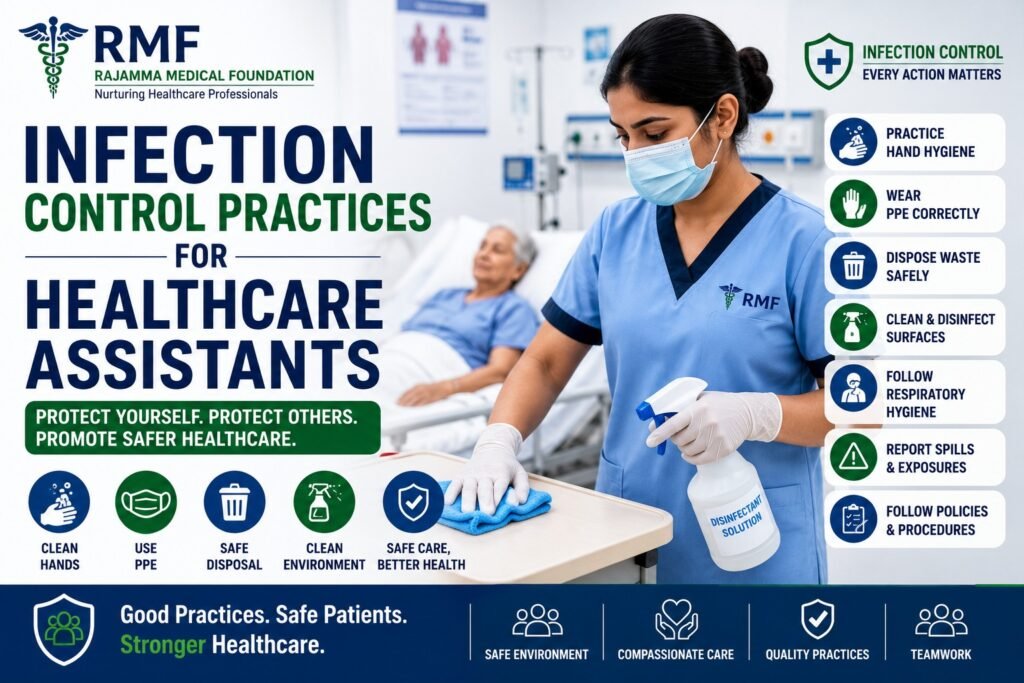
Healthcare assistants should perform hand hygiene at appropriate times, particularly before and after patient contact and after potential exposure to contaminated materials.
Use PPE Correctly
Personal protective equipment may include gloves, masks, gowns or aprons and eye protection.
The appropriate PPE depends on the task and potential exposure risk.
Handle Waste Safely
Healthcare waste should be separated and disposed of according to the facility’s established procedures.
Healthcare assistants should use designated containers and appropriate protective equipment when required.
Keep Patient Areas Hygienic
Healthcare assistants should follow workplace procedures for maintaining patient areas, handling used linen and dealing with contaminated materials.
Follow Sharps Safety
Sharps can cause injuries and exposure risks.
Healthcare assistants should avoid unnecessary handling of sharps and follow their facility’s disposal procedures.
Follow Respiratory Hygiene
Covering coughs and sneezes, using tissues properly and maintaining hand hygiene are important elements of respiratory hygiene.
Healthcare assistants should also follow any additional workplace precautions when respiratory infections are suspected.
Report Exposure Incidents
If an exposure or infection-control incident occurs, healthcare assistants should report it promptly and follow the facility’s established procedure.
Skills for Infection Control
Healthcare assistants should develop:
Attention to detail
Responsibility
Good hygiene habits
Communication
Safety awareness
Proper PPE use
Ability to follow procedures
Healthcare Assistant Training at RMF
Rajamma Medical Foundation (RMF) provides healthcare education and training.
Students interested in healthcare assistant careers can explore the available programmes and training options through RMF.
Always check the latest course, eligibility and admission information directly with RMF.
Conclusion
Infection control is a shared responsibility across healthcare teams.
For healthcare assistants, consistent hand hygiene, correct PPE use, safe waste handling, environmental cleanliness and appropriate reporting can contribute to safer patient care.
Building these habits during healthcare training can help students prepare for professional healthcare environments.
Frequently Asked Questions
- What is infection control?
Infection control refers to practices used to prevent or reduce the spread of infections in healthcare settings.
- Should healthcare assistants wash their hands after removing gloves?
Yes. Hand hygiene should be performed after glove removal according to appropriate infection-control procedures.
- What are common types of PPE?
Gloves, masks, gowns or aprons and eye protection are examples of PPE.
- Why is waste segregation important?
Proper segregation helps ensure healthcare waste is handled and disposed of safely.
- Why should healthcare assistants learn infection control?
It helps them work more safely and contributes to protecting patients, colleagues and themselves.