Tips for Succeeding in Paramedical Education
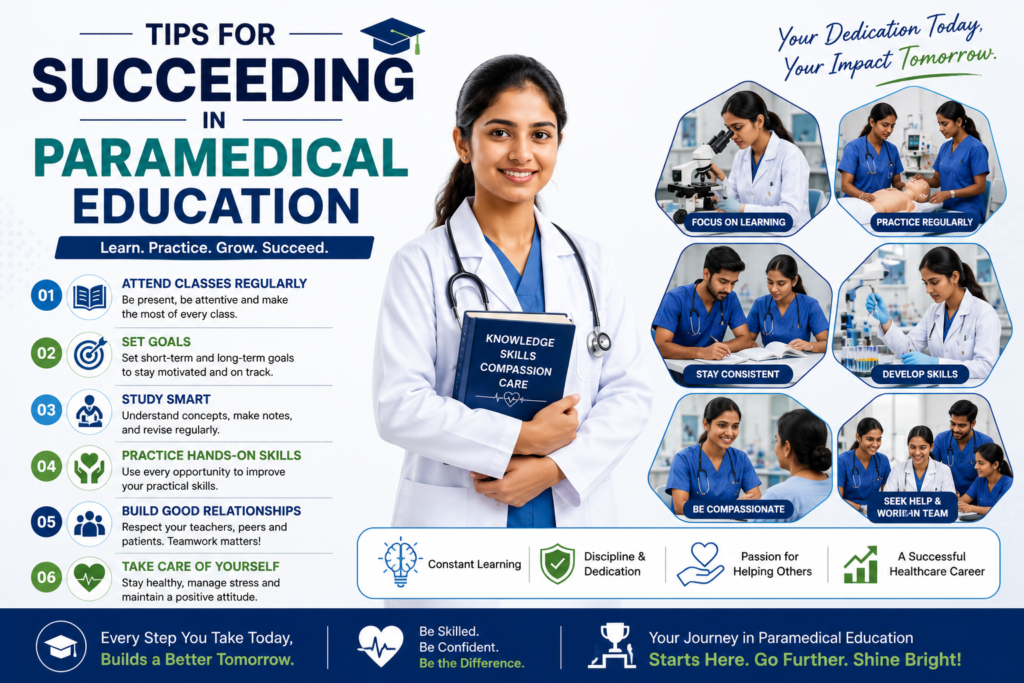
Success in paramedical education is not determined by academic performance alone. The healthcare industry requires professionals who possess practical skills, strong communication, discipline, teamwork, and the ability to adapt to real clinical environments. As healthcare services continue to grow, employers seek graduates who are confident, competent, and ready to contribute from the very first day of work.
For students beginning their allied health journey, developing the right habits during their education is essential for long-term career success. Rajamma Institute of Allied Health Sciences (RIAHS), a unit of Rajamma Medical Foundation (RMF), provides students with the academic knowledge, practical training, and career guidance needed to become skilled healthcare professionals.
Develop a Consistent Study Routine
Healthcare education covers a wide range of medical concepts, practical procedures, and clinical knowledge. Rather than studying only before examinations, successful students develop a daily learning routine.
Reviewing classroom notes, reading textbooks regularly, and revising important concepts help improve understanding and reduce exam-related stress. Consistency is one of the biggest factors behind academic success.
Never Ignore Practical Training
One of the biggest differences between paramedical education and many other courses is its emphasis on practical learning. Students must be comfortable using laboratory equipment, understanding healthcare procedures, and following safety protocols.
At Rajamma Institute of Allied Health Sciences (RIAHS), practical learning is an essential part of every program. Students participate in:
- Laboratory practical sessions
- Clinical demonstrations
- Medical equipment training
- Healthcare simulations
- Skill development activities
Advanced Diploma students also receive On-the-Job Training (OJT), giving them valuable workplace exposure before graduation.
Practical experience helps students build confidence and prepares them for professional responsibilities.
Improve Communication Skills
Healthcare professionals communicate with patients, doctors, nurses, pharmacists, laboratory staff, and families every day. Clear communication improves teamwork, reduces misunderstandings, and enhances patient care.
Students should actively develop communication skills by participating in classroom discussions, presentations, and practical activities.
Learn to Manage Your Time
Balancing theory classes, practical sessions, assignments, and personal study requires good time management.
Successful students often:
- Prepare study schedules
- Complete assignments on time
- Revise regularly
- Balance practical and theoretical learning
- Stay organized throughout the academic year
Good time management improves productivity while reducing unnecessary stress.
Build Professional Discipline
Professional habits developed during student life continue throughout a healthcare career. Punctuality, responsibility, respect, honesty, and commitment to learning help students become dependable healthcare professionals.
Following laboratory rules, maintaining professionalism, and respecting ethical standards prepare students for real workplace expectations.
Work Well with Others
Healthcare is a team effort. Allied health professionals collaborate with multiple healthcare experts to provide quality patient care.
Students who actively participate in group learning, laboratory activities, and collaborative projects develop teamwork, leadership, and problem-solving skills that employers highly value.
Learn from Experienced Faculty
Faculty members play an important role in shaping future healthcare professionals. At RIAHS, experienced educators guide students through both academic learning and practical skill development.
Students receive support in understanding healthcare concepts, improving technical abilities, developing professional ethics, and preparing for future careers.
Focus on Career Development
Education is not only about earning a certificate—it is about building a successful future. Students should take advantage of career guidance opportunities, participate in practical training, and continuously improve their professional skills.
RIAHS supports students through career counselling, professional development, and placement assistance, helping them confidently transition into healthcare careers.
Why Choose RIAHS?
Choosing the right educational institution creates a strong foundation for future success. Rajamma Institute of Allied Health Sciences (RIAHS) combines quality education with practical learning to prepare students for the healthcare industry.
Students benefit from:
- Career-oriented diploma and advanced diploma programs
- Practical laboratory training
- Clinical demonstrations
- On-the-Job Training (OJT)
- Experienced faculty
- Modern laboratories
- Career counselling
- Placement assistance
This comprehensive learning environment helps students graduate as confident, skilled, and job-ready healthcare professionals.
Conclusion
Success in paramedical education is achieved through dedication, continuous learning, practical experience, and professional development. Students who focus on improving both technical knowledge and workplace skills are better prepared for rewarding healthcare careers.
Rajamma Institute of Allied Health Sciences (RIAHS), a unit of Rajamma Medical Foundation (RMF), is committed to supporting students through quality education, hands-on training, experienced faculty, and career-focused learning. By developing the right habits and choosing the right institute, students can build a strong foundation for a successful future in healthcare.
Frequently Asked Questions (FAQs)
1. How can students succeed in paramedical education?
Students should attend classes regularly, focus on practical training, develop strong study habits, improve communication skills, manage time effectively, and maintain professional discipline.
2. Why is practical training important in paramedical courses?
Practical training helps students apply theoretical knowledge, improve technical skills, gain confidence, and prepare for real healthcare environments.
3. Does RIAHS provide practical learning opportunities?
Yes. RIAHS offers laboratory practical sessions, clinical demonstrations, and On-the-Job Training (OJT) for Advanced Diploma students.
4. What skills should every paramedical student develop?
Students should build practical healthcare skills, teamwork, communication, time management, professionalism, ethical responsibility, and confidence.
5. Why choose Rajamma Institute of Allied Health Sciences (RIAHS)?
RIAHS, a unit of Rajamma Medical Foundation (RMF), provides career-oriented education, experienced faculty, practical training, modern laboratories, career guidance, and placement support to prepare students for successful healthcare careers.